Travel Lines in Palmistry: Where to Find Them and What They Reveal
Travel lines are minor markings on the hand that traditional palmistry associates with physical journeys, changes of residence and significant inner transformations. Not everyone has them visible — and that also has meaning.
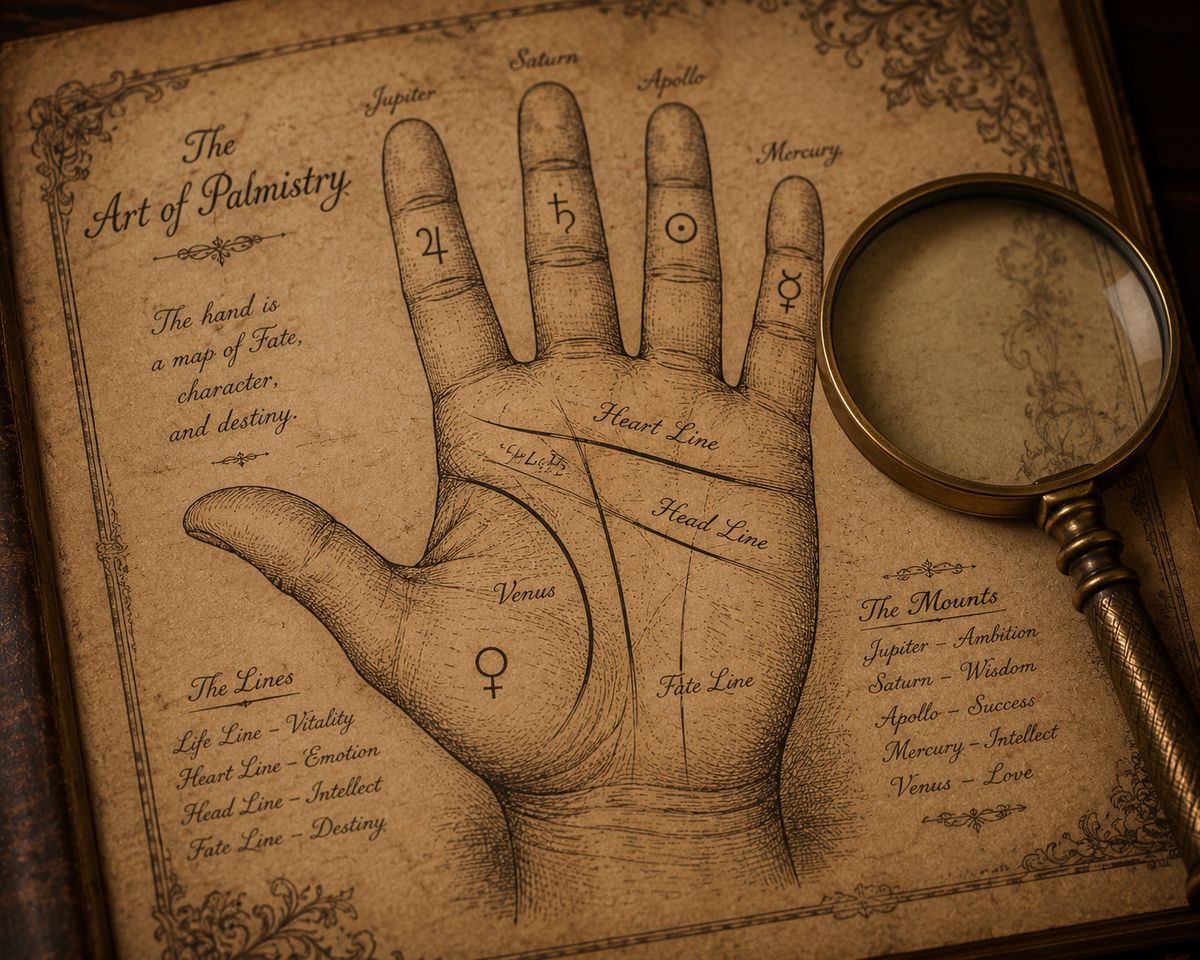
What are travel lines in palmistry
Travel lines are minor lines that appear on the outer edge of the palm, on the side of the Mount of the Moon (the fleshy area at the base of the palm, opposite the thumb). They appear as thin horizontal lines running from the edge of the hand inward. Do not confuse them with the wrist bracelets or the intuition line, which also runs through that area.
Where exactly to find travel lines on the hand
To locate them: gently curve your hand and look at the outer edge of the palm (little finger side, below the little finger). Travel lines appear on the Mount of the Moon, between the wrist and the little finger, as horizontal markings. The more pronounced and longer they are, the greater the emphasis on mobility in classic palmistry. Very faint or short lines usually indicate brief trips or a desire to travel that has not materialized.
What it means to have many travel lines
Having several well-marked travel lines is interpreted in classic palmistry as indicating a life with significant mobility, frequent changes of residence or a nomadic spirit. In contemporary readings, these lines can also point to inner mobility, periods of deep change or a mindset oriented toward exploration. They do not necessarily mean you will travel; they may reflect how the soul processes experience.
Having no visible travel lines: what it indicates
The absence of marked travel lines does not mean you will not travel or that your life is uneventful. Many hands with few visible minor lines belong to people with a very active inner life or whose energy concentrates in the four main lines. In palmistry, what does not appear on the hand can be as significant as what does.
The difference between physical travel and inner journey in palmistry
Some readers distinguish between travel lines that cross toward the fate line (indicating the journey has a concrete impact on the person's direction) and lines that remain isolated on the Mount of the Moon (indicating travel more linked to exploration or rest). This distinction is not universal, but it adds a deeper level of reading for those who apply it.
Do you have lines on your hand you cannot clearly identify?
A palmistry reading from a photo analyzes not just the four main lines but also the minor lines, mounts and special markings. Upload your palm photo and receive your full reading.
Get my palm readingLong vs short travel lines: reading differences
A travel line that crosses most of the palm reaching toward the center or the fate line is associated with a journey that has a lasting impact on the person's life. A short line that barely extends from the edge may indicate a brief trip or an unfulfilled desire to move. The depth and clarity of the line also matter: a well-defined line carries more weight than a surface one.
Why the full reading gives more context than individual lines
As with any marking on the hand, travel lines are interpreted within the context of the whole hand. The same number of travel lines can mean different things on a hand with a strong fate line versus one without it. An experienced reader does not read isolated marks, but the complete system formed by the main lines, mounts and special markings together.
The invisible in your inbox.
Palmistry, hand symbols and practical reading. No spam.